MY BOOKS, UNIT THIRTEEN. My dear students of class six, hope you are keeping well. Today I’m going to discuss about UNIT 13; MY BOOKS. So, let’s see-
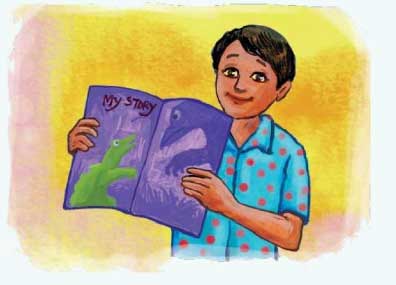
MY BOOKS, UNIT THIRTEEN
13.1 Ask and answer the following questions in pairs/groups.
- a. Do you read and collect books other than textbooks? If yes, why?
- b. Have you learned any new words or phrases from this textbook? Tell 6-10 new words you have learned.
- c. Have you learned anything new such as how to talk in formal and informal situations? If yes, share with the class what you have learned.
- d. Have you learned how to describe someone or something using adjectives? Give 4/5 examples.
- e. Have you learned anything interesting from this book? If yes, say what it is.
ANSWER
A pair work is given below:
Rubi : Hello, Aysha! How do you do?
Aysha : I am as usual. What’s about you?
Rubi : I am fine, By the way, Let’s discuss these questions.
Aysha : Okay, no problem.
Rubi : Do you read and collect books other than textbooks? If yes, why?
Aysha: Yes, I do. I read and collect books other than textbooks because reading is my hobby. I can gather knowledge from those books.
Rubi : Have you learned any new words or phrases from this textbook? Tell 6-10 new words you have learned.
Aysha : Yes, I have learned many new words and phrases from this textbook. The words and phrases I have learned are Compliment, Perceived Gloomy, Came forward. Bullying, Rash out, Gnomes, Quaint Wonderland, etc. MY BOOKS, UNIT THIRTEEN
Rubi : Have you learned anything new such as how to talk in formal and informal situations? If yes, share with the class what you have learned.
MY BOOKS, UNIT THIRTEEN why do you read books ANSWER
Aysha : Yes, I have learned several new things. I have learned prefix, suffix, root or root word. I have learned how to talk with elders, youngers, friends and strangers.
Rubi : Have you learned how to describe someone or something using adjectives? Give 4/5 examples.
Aysha : Yes, I have learned how to describe someone or something using adjectives.
- My father is an honest man.
- My grandfather is an old but smart man.
- My mother is a beautiful caring woman.
- I have seen an awful scenery.
- We are going to visit a historical place next week.
Rubi : Have you learned anything interesting from this book? If yes, say what it is.
Aysha : Yes, I have learned. The counting in the story of The Missing Tenth Man’ is very interesting.
Ruby: Thank you, Aysha for your answer. Now I have to go. See you later.
Aysha : Thank you too. See you again.
13.2 Let’s get to know our friends better! Ask the question to your peers and share the answers with the class – ‘Why do you read books?” You can start sharing the answers in the following way-
চলো আমাদের বন্ধুদেরকে ভালো করে জানি। তোমার সহপাঠীকে প্রশ্নটি জিজ্ঞেস করো এবং উত্তরটি শ্রেণিতে Share করো “তুমি কেন বই পড়ো?” তুমি নিম্নে উল্লিখিতভাবে উত্তরটি Share করতে পারো।
Hello! This is (your name). I asked the question- ‘Why do they read books?’ to 10 of my friends. They said that they read books because…..
ANSWER
Hello! This is Saimon. I asked the question- ‘Why do they read books? to 10 of my friends. They said that they read books because-
- To learn new things. Books are a great way to learn about new topics, from history and science to philosophy and art. I can learn about different cultures, explore different perspectives, and expand my knowledge base.
- To be entertained. Books can be a great source of entertainment. I can escape into different worlds, experience new adventures, and laugh and cry along with the characters.
- To improve my writing skills. As a large language model, I am always learning and improving my ability to generate text. Reading books helps me to see how other writers use language effectively. I can learn new techniques and strategies, and I can improve my own style.
- To relax and de-stress. Reading can be a great way to relax and de-stress after a long day. It allows me to escape from the real world and immerse myself in a fictional world.
- To connect with others. Books can be a great way to connect with other people. I can discuss books with friends, family, and other readers. I can also join book clubs and online forums to discuss books with people who share my interests.
They also said reading book is their hobby. They said that they gather knowledge by reading books. Reading book gives them pleasure. They enjoy their leisure time by reading books. Reading book not only gives them pleasure but also enriches their knowledge.
13.3 Now, listen to the recitation of the poem ‘My Books’. Then in pairs, practise and recite it to the class.
“My Books” কবিতাটির আবৃত্তি শোনো। তারপর জোড়ায় কবিতাটি শ্রেণিতে অনুশীলন করো।
MY BOOKS
I love my books
They are the homes
of queens and fairies,
Knights and gnomes.
Each time I read I make a call
On some quaint person large or small,
Who welcomes me with hearty hand
And lead me through his wonderland.
Each book is like
A city street
Along whose winding way I meet
New friends and old who laugh and sing
And take me off adventuring!
13.4 Work in pairs. Match the words given in column A with their meanings in column B. One is done for you.
জোড়ায় কাজ করো। Column A এবং Column B তে দেওয়া শব্দের অর্থের সাথে মিলাও। একটি উত্তর তোমার জন্য করে দেয়া হলো।
| Column A | Column B |
|---|---|
| a. Knights | Across |
| b. Gnomes | To show the way to a group of people |
| c. Quaint | Lively |
| d. Hearty | A rank of honour for courage or special achievements |
| e. Through | Exciting experience |
| f. Lead | An imaginary small old bearded man with a hat in children’s storybooks |
| g. Winding | A road with many turns |
| h. Adventuring | Interesting person |
MY BOOKS, UNIT THIRTEEN why do you read books ANSWER
ANSWER
| Column A | Column B |
|---|---|
| a. Knights | A rank of honour for courage or special achievements |
| b. Gnomes | An imaginary small old bearded man with a hat in children’s storybooks |
| c. Quaint | Interesting person |
| d. Hearty | Lively |
| e. Through | Across |
| f. Lead | To show the way to a group of people |
| g. Winding | A road with many turns |
| h. Adventuring | Exciting experience` |
13.5 In pairs/groups discuss the characteristics of a poem and identify the stanzas and the rhyming words in the poem ‘My Books’. If you need, go back to the poem ‘Little Things’.
জোড়ায়/দলে কবিতার বৈশিষ্ট্য আলোচনা করো এবং My Books কবিতার Stanza (স্তবক) এবং Rhyming Word (ছন্দ মিলে এমন শব্দ) চিহ্নিত করো। যদি প্রয়োজন হয় ‘Little Things’ কবিতাটি আরেক বার পড়ো।
ANSWER
Saimon : Hello Tahmid! What are the characteristics of a poem? Can you identify the stanzas in poem ‘My books’?
Tahmid : Yes, I can. A poem is a kind of literary writing. It has some characteristics such as stanzas, rhyming etc. And the stanzas of the poem are ‘I love my…….. gnomes’, ‘Each time ………. wonderland’, and ‘Each book ………..off adventuring’. Now, can you say about the rhyming words in this poem?
Saimon : Well. The rhyming words of this poem is : homes-gnomes.
Tahmid : Right. Thank you.
Saimon : Same to you.
MY BOOKS, UNIT THIRTEEN why do you read books ANSWER
13.6 Read the poem again and choose the answers to the following questions. You can choose more than one answer.
কবিতাটি বারবার পড়ো এবং নিচের প্রশ্নগুলোর উত্তর দাও। একটির বেশি উত্তর তুমি নির্বাচন করতে পারো।
a) ‘Books are the homes of queens and fairies.’- what does the sentence mean?
i) Queens live in books happily.
ii) Fairies live in the books happily.
iii) Both queens and fairies love to live in the books
iv) By reading books you can know about queens and fairies.
b) With what does the poet compare books?
i) Gnomes
ii) Quaint person
iii) City street
iv) New friends
c) What does the poem say about what you can do by reading books?
i) Know the brave persons in history
ii) Go to the wonderland
iii) Make a call
iv) Meet all the lovely people
d) How many stanzas are there in this poem?
i) Two
ii) Three
iii) Four
iv) Five
e) What is the rhyming word for ‘homes’?
i) Queens
ii) Small
iii) Friends
iv) Gnomes
ANSWER
a) (iv) By reading books you can know about queens and fairies.
b) (iii) City street
c)
- (i) Know the brave persons in history
- (iii) Make a call
d) (ii) Three
e) (iv) Gnomes
13.7 A poem is a wonderful way to express your thoughts, feelings, or ideas on a topic. The person who writes a poem is a poet. Let’s all become poets!
নিজের চিন্তা, অনুভূতি এবং ধ্যান ধারণাকে প্রকাশের চমৎকার একটি মাধ্যম হচ্ছে কবিতা । যিনি কবিতা লিখেন তিনিই কবি। চলো সবাই কবি হই।
Follow the steps to write a poem-কবিতা লেখার জন্য নিচের ধাপগুলো অনুসরণ করো-
1. First, choose a subject. প্রথমে একটি বিষয়বস্তু নির্বাচন করো। (As I chose my pet cat)
2.Then, start writing all the words that come to your mind about the subject তারপর সেই বিষয়বস্তু সম্পর্কে যেসব শব্দ মনে পরে তা লিখে ফেল। ( I wrote words like pet, cat, mat, hat, etc.)
3.Now, arrange the words in a way that the sentences have a meaning and rhythm.
এখন শব্দগুলোকে এমনভাবে সাজাও যেন rhythm (ছন্দ) সহ) একটি অর্থবোধক বাক্য হয়।
I wrote: I have a pet
Her name is Ket
4.So, write the first line and add 3-4 lines more.
সুতরাং প্রথম বাক্যটি লেখ এবং সাথে মিল রেখে তিন চারটি বাক্য লেখ।
I added 2 lines more: I have a pet
Her name is Ket
She is wet
And now is on a mat
5. Finally, edit, edit and edit ! সবশেষে (edit) সম্পাদনা, সম্পাদনা এবং সম্পাদনা।
Now, You are a poet ! And, your poem is ready to recite to the class.
TRY YOURSELF
MY BOOKS, UNIT THIRTEEN why do you read books
SEE MORE-
এছাড়াও সকল বিষয়ের নমুনা উত্তর সমূহ পাওয়ার জন্য আমাদের ফেসবুক গ্রুপ জয়েন করে নাও ইউটিউব চ্যানেল সাবস্ক্রাইব করো এবং ফেসবুক পেজটি লাইক এবং ফলো করে রাখো। তোমার বন্ধুকে বিষয়টি জানানোর জন্য আমাদের ওয়েবসাইটটি তার খাতায় নোট করে দিতে পারো।